The portal shows a different name
Look for Intermountain Health patient portal and confirm the official domain; a parent-system name may appear.
Hospital integration guide
 Intermountain Health Intermountain Health · intermountainhealth.org
Find Intermountain Health records in its portal or connect to KeepMD. Choose the records contact and request route for the state where you received care.
KeepMD is an independent personal health record app. It is not affiliated with, endorsed by, or operated by Intermountain Health or Epic Systems Corporation. MyChart® is a trademark of Epic Systems Corporation.
Intermountain Health spans several states, so the location of your care matters when requesting a record. Start with its MyChart-powered patient portal for available visit documents, then use the regional records service for missing material. KeepMD can help you organize the records returned by your connection alongside information from other providers.
Utah and Idaho use one records route; Colorado, Montana, Wyoming, and Nevada use another.
Check the hospital, patient profile, and date range before downloading or requesting a larger record.
A missing older note or a specific document may need a formal request even when recent portal results are visible.
Have records at another health system? Explore other Epic hospital guides.
Use these ten categories to check your connected records. What arrives depends on what the hospital has recorded and shares for your account and dates of care.
Use this checklist for an Epic connection. Available content depends on your account; listing a category does not confirm that records in it have been imported.
These may exist in the portal, but KeepMD has not verified their availability through this connection.
Records Intermountain Health typically releases through its medical-records process, not through the patient-access connection.
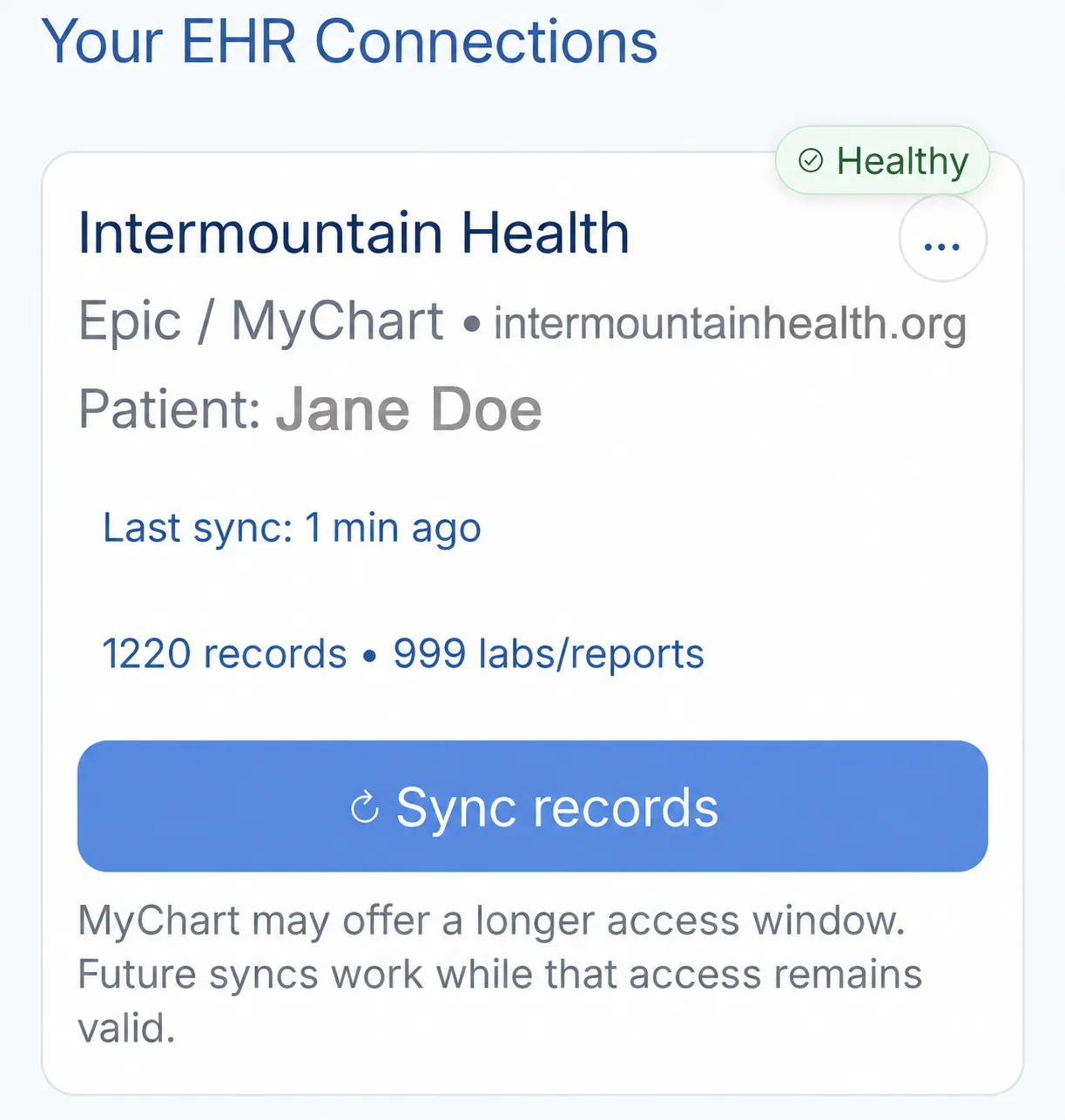
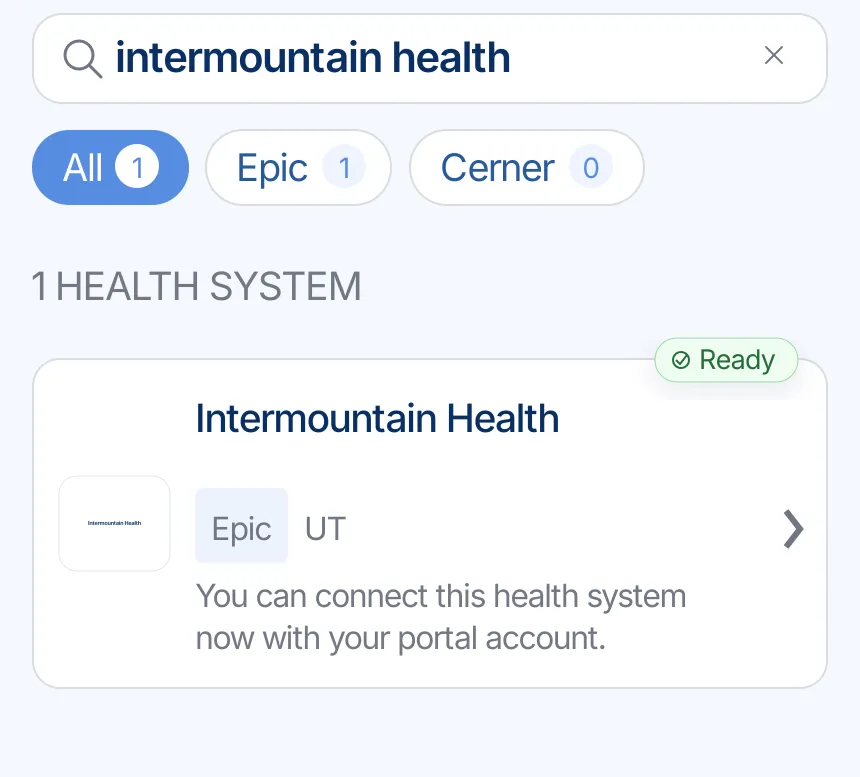
Walk through an example Intermountain Health connection, from the KeepMD provider search to the portal handoff and import summary. Confirm the organization and the region where you received care before authorizing access. The record totals in the screens are examples.
Search for Intermountain Health or a familiar system name, then choose the correct provider result.
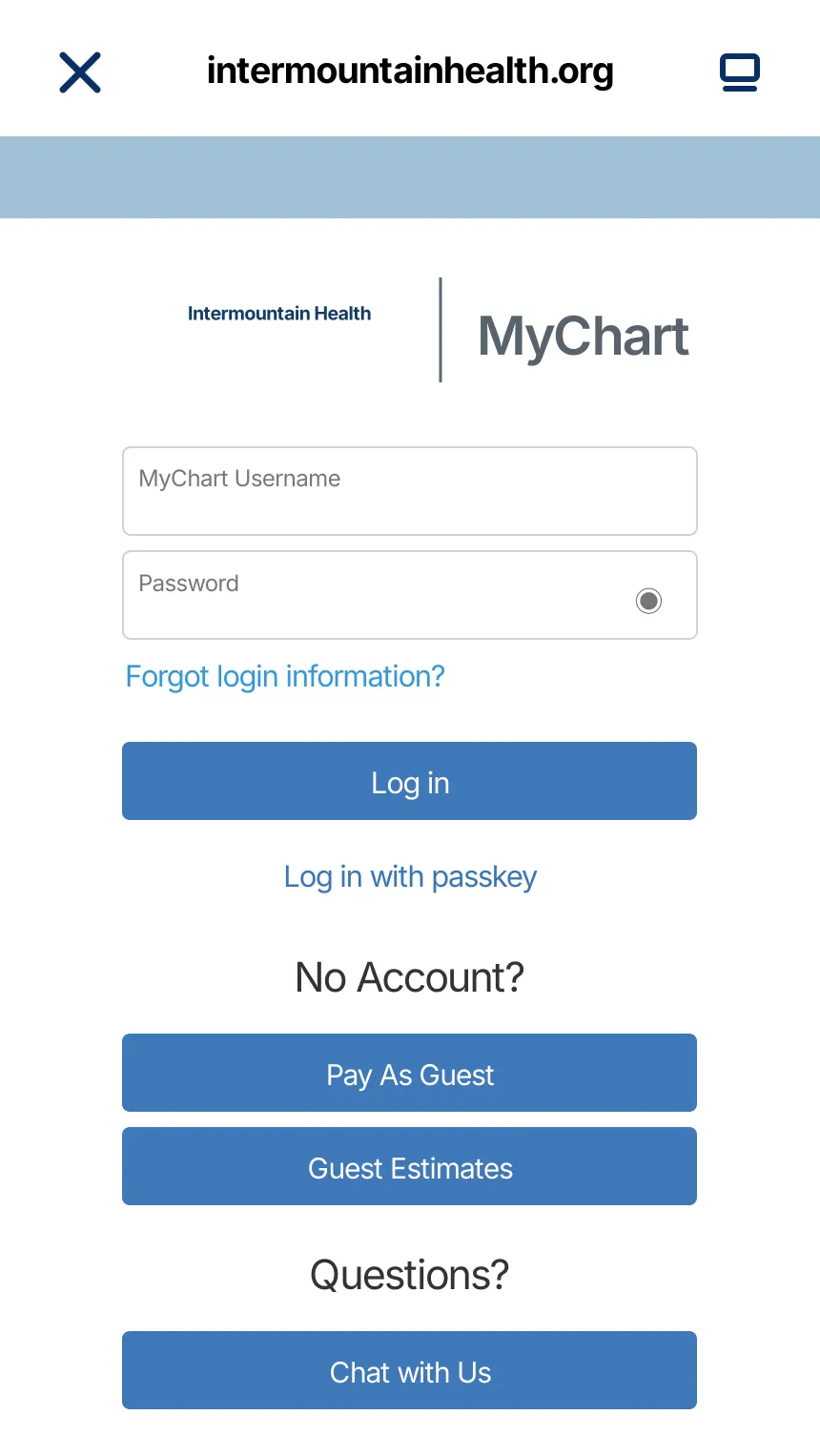
KeepMD opens the provider-owned sign-in page. Enter credentials there; KeepMD does not receive or store your password.
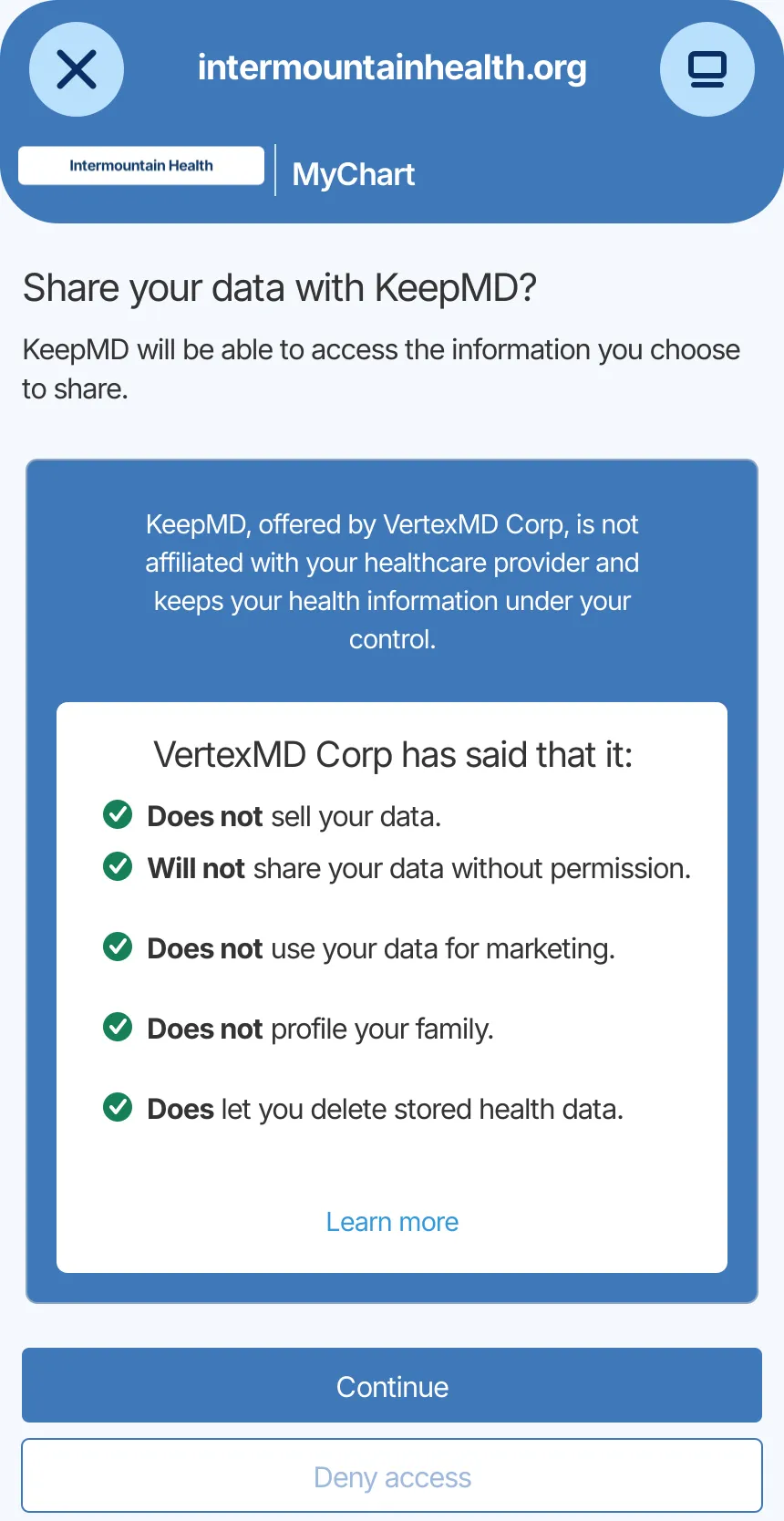
Review the information the portal can share and decide whether to authorize the connection.
Select the information you want to organize. Actual availability depends on your account.
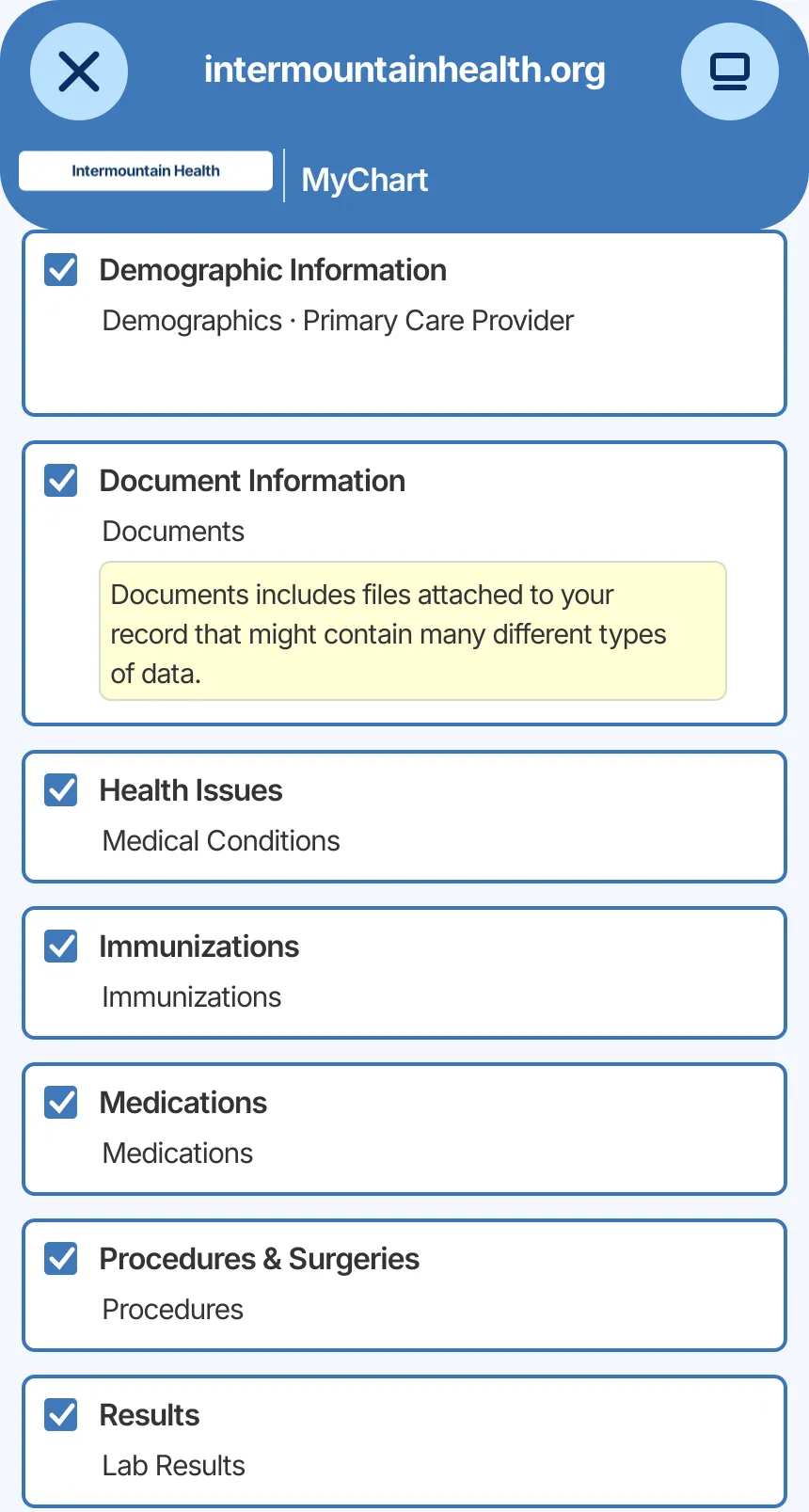
KeepMD secures the connection and checks the information the provider makes available.
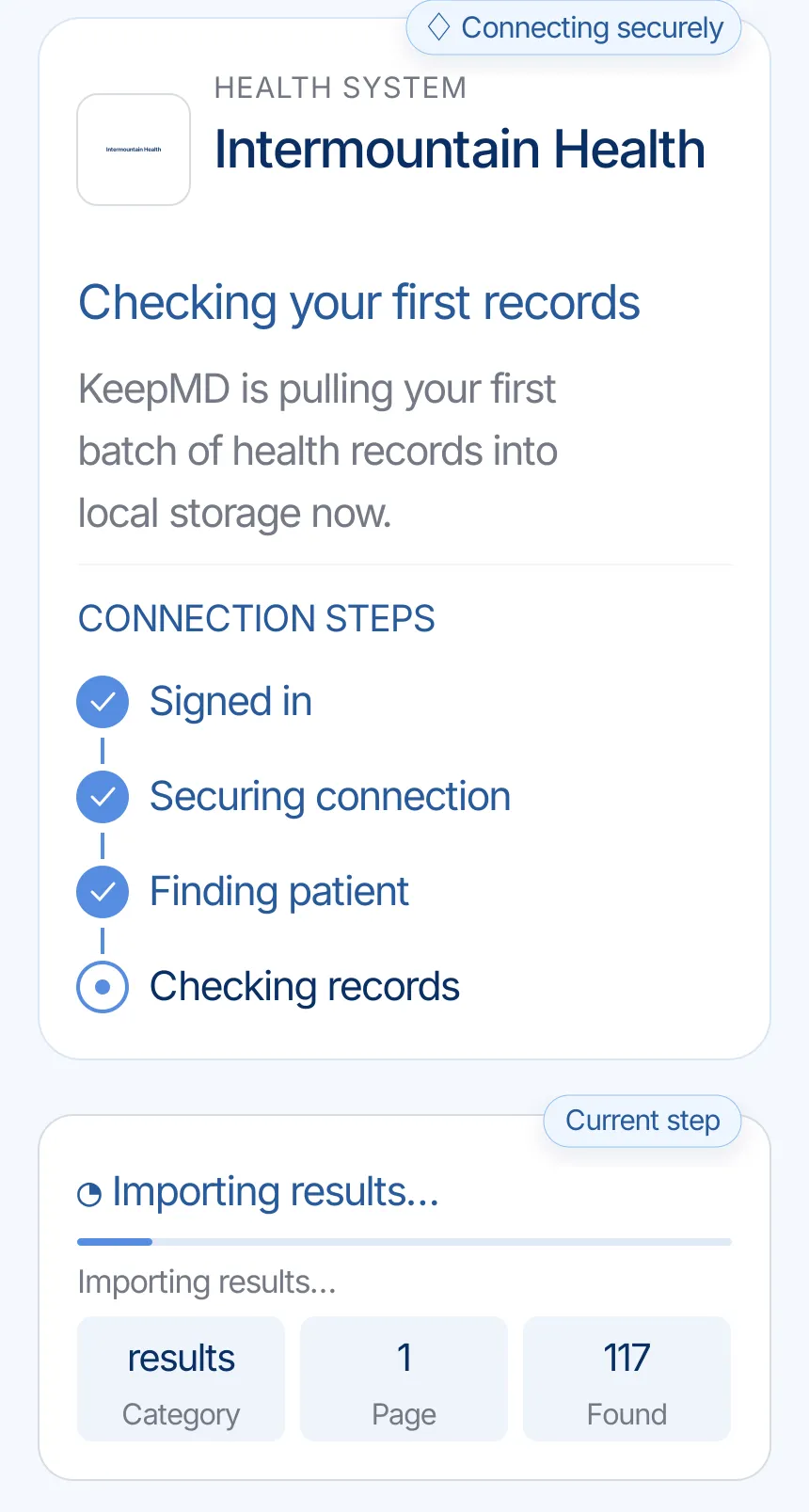
KeepMD groups what the connection returns. Categories and totals can vary.
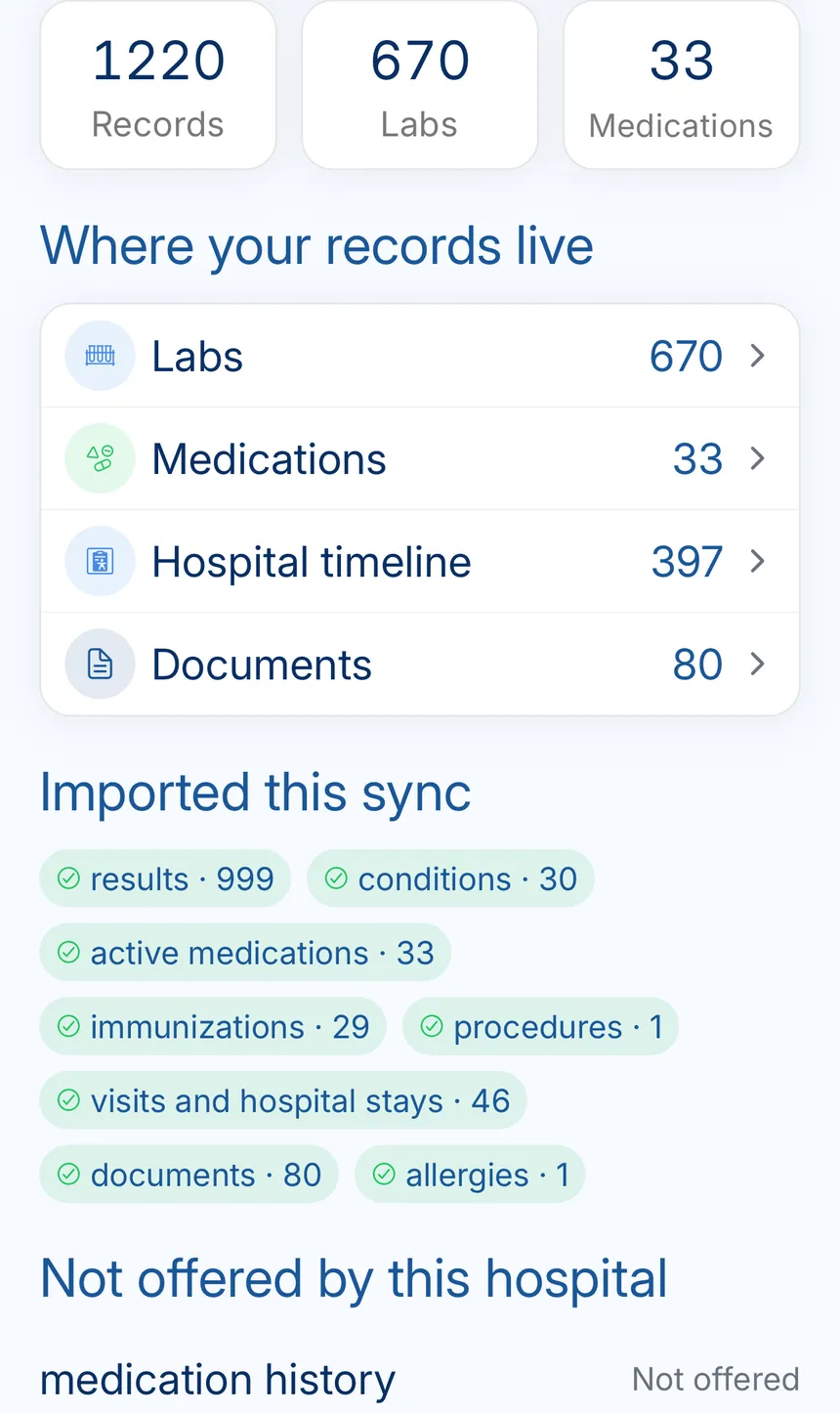
The summary keeps the provider, last update, and organized categories together.
Intermountain Health's main location and current official records channels.

Intermountain Medical Center campus (2020 photo)
Intermountain Health — official location 2026-09-24
Everything the connection does not cover: identifying the right organization, portal downloads, formal requests, privacy, and the post-import check.
Start at Intermountain Health’s official patient-portal page. Use the location of your care to choose the right account or request route, rather than relying on a hospital name alone.
Intermountain’s formal records contacts are grouped by region. Your current home address does not determine which office holds the records; the location of the care is what matters.
Intermountain describes a MyChart workflow at Menu → Sharing → Request Records for specific visits or documents not already available.
Its records guide describes lab results, discharge summaries, notes, and imaging information in the portal. Portal access does not establish that every item will arrive through a connected app. Compare what you actually receive before relying on a collection for an upcoming appointment.
Choose the records service for the state where you received care. Utah and Idaho use 385-533-0440 for records questions. The centralized records contact for Colorado, Montana, Wyoming, and Nevada is 303-467-4046.
If you are requesting on someone else’s behalf, review the official authorization instructions before submitting.
Authorization takes place through Intermountain Health’s portal. Read the permissions screen and confirm the patient before continuing.
If you want to stop sharing with an app, check the portal’s connected-app controls. Stopping future access is separate from deleting copies you have already downloaded or sent. KeepMD is independent of Intermountain Health and Epic.
Review Intermountain records by facility and date range. If you have care in more than one state, check each region against your paperwork. A recent visit appearing successfully does not settle whether older records or another region’s documents are included.
Ask the team that created the record about an incorrect diagnosis or detail; importing it again does not correct the source.
Look for Intermountain Health patient portal and confirm the official domain; a parent-system name may appear.
Refresh the connection, compare it with the portal, and formally request anything still absent.
Use the region-specific records route because contacts differ by state
FAQ
Start with Intermountain Health MyChart to review information available from Intermountain Health. Open it through the official website and check the patient profile. Use the request route in this guide when a document is missing.
For Utah and Idaho records, call 385-533-0440. For Colorado, Montana, Wyoming, and Nevada, the centralized records contact is 303-467-4046. Choose by where you received care.
The listed fax route is: 385-215-7047 (UT/ID); 303-467-8966 (CO/MT/WY/NV). Confirm the destination in the official guide before sending a signed form.
Identify the facility, dates, and documents you need. Check the portal first, then follow the official request process for missing material. Keep the confirmation so you can follow up with the same office.
Yes. Search for the system in KeepMD, continue to the portal, and review access before authorizing.
No. KeepMD is independent and is not affiliated with, endorsed by, or operated by the health system or Epic.
Check the patient profile, facility, and date range. Compare with the portal: a completed connection does not establish that every document is included. For older notes, images, or a complete chart, use the hospital’s records-request guidance.
Intermountain describes imaging reports and images in its portal. If the study you need is missing, use the records instructions for the state where the exam took place and specify that you need the images.